Tuesday, January 4, 2011

NEW EVO Launching Jan 9th 2011

HTC EVO Shift vs. the Original EVO 4G
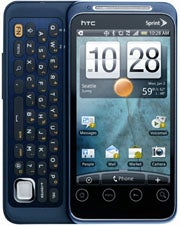
HTC EVO Shift 4G
Grab a cigar, gang: Sprint's HTC EVO 4G officially has a new sibling.
Sprint unveiled the HTC EVO Shift 4G on Tuesday, kickstarting what promises to be a week filled with attention-grabbing Android announcements. The new EVO Shift 4G may share its older brother's name, but it's a drastically different device -- both inside and out.
The most basic differences are immediately evident upon seeing the new phone. The HTC EVO Shift is significantly smaller than its supersized predecessor, with a 3.6-inch screen compared to the original EVO's 4.3-inch monster display. The EVO Shift uses that extra room to add a slide-out QWERTY keyboard, something the first EVO does not possess.
That's just the start of the EVO story, though. Check out our comparison chart for a side-by-side glimpse at the two phones' specs, and read on for some more specifics.

HTC EVO Shift: Meet the New EVO

Click image to enlargeThe best way to sum up the difference between the HTC EVO Shift and the original EVO 4G is that the new model feels more like a productivity-focused device, while the first edition has multimedia powerhouse written all over it. The new EVO isn't necessarily better or worse; it's just a different kind of phone designed for a different kind of user. (Fittingly, as of now, there are no signs of Sprint discontinuing the EVO 4G; the new EVO Shift appears to be more of an addition than a replacement.)
Aside from its smaller profile and added physical keyboard, the EVO Shift has a 5MP camera compared to the first EVO's 8MP offering. It lacks a secondary, front-facing camera as well as an HDMI out port. The Shift does, however, record 720p HD-quality video.
In terms of under-the-hood power, the EVO Shift has an 800MHz processor -- a number that may initially appear less impressive than the EVO 4G's 1GHz chip. Interestingly, though, some early speed tests performed on the phones show the Shift coming out ahead. Mobile retailer Wirefly ran Quadrant analyses on the two devices and consistently found the EVO Shift receiving higher benchmark scores, with end results around 1477 compared to the EVO 4G's 1232.
One burning question: What about Android battery life? The EVO 4G, after all, has taken some heat for its, err, premature depoweration. The EVO Shift's smaller screen should in theory put a lower strain on the phone's power consumption. That said, both devices use the same 1500 mAh battery, and both are listed by Sprint as having about six hours of talk time -- so we'll have to wait and see how the newcomer performs in the wild before making any final judgments.
The EVO Shift, by the way, ships with Android 2.2 -- aka Froyo. It's not immediately clear if or when it'll be upgraded to the shiny new Android Gingerbread release, but one would imagine it'd be relatively early in line for the nod. HTC has yet to make any firm upgrade commitments for any of its devices, but based on past trends -- the original EVO was the first carrier-specific device to receive the Android 2.2 upgrade, preceded only by Google's Nexus One -- the original EVO sure seems like a strong contender for a timely Gingerbread rollout, too.
The HTC EVO Shift 4G will be available for $149.99 (yep, 50 bucks cheaper than its big bro) starting January 9.

Friday, December 10, 2010

Sprint Launches Submersible Sanyo Taho

Sprint announced availability of the fully submersible Sanyo Taho by Kyocera, a new feature phone that can withstand up to 30 minutes under water.

The Taho features a Dura-Grip texture, a 2-inch internal display and 1-inch monochrome external display and a 2-megapixel camera with flash and video capabilities. The phone includes 256 MB of internal memory, a 1 GB microSD memory card and support for memory cards up to 32GB. The Taho also supports GPS and Java Multitasking for third-party location-based services.

"This is our first handset that pairs a tough, military-grade design with features to stand up to the rigors and demands of extreme jobs and lifestyles," said Yasuhiro Ohishi, vice president of sales and marketing at Kyocera Communications, in a statement.


The Sanyo Taho will be available for $99.99 after a $50 mail-in rebate. It will be available in all remaining Sprint sales channels beginning Jan. 9, 2011.

Talk Time of up to 6.1 Hours : Weight of 4.7 oz

Google Activating 300,000 Android Devices per Day


It appears fragmentation problems haven't slowed adoption of the Android platform. Google's vice president of mobile platforms, Andy Rubin, today tweeted that the company is seeing 300,000 Android activations per day. That's up a lot from just four months ago, when Google CEO Eric Schmidt announced that the company had hit 200,000 Android activations per day.

Apple CEO Steve Jobs has been vocal about his skepticism about how Google records their activation numbers. In a keynote at Apple's iPad and Apple TV event back in September, Jobs said: "We think some of our friends are counting upgrades in their numbers," something Apple doesn't do.

But Jobs' comments were quickly rebutted by Google. Shortly after Jobs made the claims, Google rebutted via comments made by a spokesperson to Fortune Magazine. "The Android activation numbers do not include upgrades and are, in fact, only a portion of the Android devices in the market since we only include devices that have Google services," the spokesperson said.

As of September of this year, Apple claimed to be activating 230,000 iOS devices per day, which would include iPads and iPod touches.

Friday, December 3, 2010

How to Print From an Android Phone

The Android OS doesn't yet provide native support for printing. Thankfully, third-party developers have filled the void for Android smartphones. The most popular option is PrinterShare by Mobile Dynamix.
PrinterShare, also called PrinterAnywhere, has two printing modes: Nearby and Remote. Nearby mode prints to select Bluetooth- and Wi-Fi-connected printers straight from the phone. You can install the mobile app directly to your phone, choose your printer, and print. You can print a test page via Bluetooth or Wi-Fi at no cost to see if it works. In fact, you can print 20 pages for free; beyond that, you'll need to pay $5 for the full PrinterShare app.
If you don't have a Bluetooth or wireless printer (and most people don't), Remote mode prints over the Internet by installing "listening" software to your PC or Mac. When printing, the app "calls" the program on your computer via Wi-Fi and then prints through the computer to the attached printer. Because it establishes a peer-to-peer connection with your computer, it does not require a network printer.
In the step-by-step guide below, we'll cover how to install PrinterShare and print through its Remote mode.

Step by Step

Step 1. Download PrinterShare for Android using your computer (Mac or PC). Connect your Android phone to the computer and run the PrinterShare installer. Through the computer side of the program, select which printer to make available to the Android phone.
Step 2. Launch the PrinterShare app on the Android phone. Make sure that the computer is turned on, Wi-Fi is enabled, and the printer is turned on.
Step 3. In the PrinterShare app, select the icon for the type of file that you want to print. You can print pictures, Web pages, calendar entries, contacts, messages, your call log, Google Docs files, or PDF files.
PrinterShare
Step 4. Depending on what you select, PrinterShare will prompt you to navigate to the specific item to print. If the document has multiple pages, you can choose the pages to print. When you've made your selection, click the big Print button.
PrinterShare
Whether you're printing a recently shot photo or a document sent via e-mail, PrinterShare allows you to print quickly from your Android smartphone

Sprint Looking to 4G Deal with T-Mobile

Sprint Nextel says it supports a network accord between Clearwire and Deutsche Telekom AG's T-Mobile USA, according to a Bloomberg Report that cites comments from Goldman, Sachs & Co. analyst Jason Armstrong.

According to Armstrong, who had a meeting with Sprint CEO Dan Hesse and CFO Tom Brust on Dec. 1, Sprint would support an equity infusion into Clearwire by T-Mobile.


A deal between the two would allow T-Mobile to buy capacity on Clearwire's WiMAX network to supplement its existing HSPA+ network. Armstrong said negotiations between Clearwire and T-Mobile likely would continue but that there was no commitment by either side to ink a deal by year's end, according to Bloomberg.

Clearwire has struggled recently to make ends meet in the face of strong competition from the likes of Verizon Wireless, which is launching its LTE network in 38 markets. Additionally, Clearwire was recently forced to lay off 600 workers as it wrestles with a major cash crunch.

Clearwire will run out of cash as early as the middle of next year without additional funding, according to Sprint SEC filings. In Clearwire's recent 10-Q filing with the SEC, the company expressed concerns about whether it could continue without further funding.

Clearwire today announced plans to raise over $1.1 billion through the offering of debt securities in private placement transactions.

link to original feed: Wireless Week

Wednesday, December 1, 2010

LTE Lights Up On Sunday , But No Verizon 4G devices yet

Verizon Wireless will turn on its LTE service in 38 markets this coming Sunday, but the mobile operator still doesn’t have compatible phones for the 4G network.
For now, Verizon is targeting road warriors with laptops; users will get average data rates of 5-12mbps downstream and 2-5mbps upstream, the company said.
Verizon will charge $50 per month for 5GB, which costs $10 less than 5GB on the 3G network. Verizon also will offer 10GB on its LTE network for $80. So far, the operator has not imposed any data caps. However, subscribers who exceed their monthly allotment will pay $10 for each additional gigabyte they consume.
Smartphones and other devices that can run on Verizon’s LTE platform won’t be available until at least the middle of next year. At some point, analysts expect consumers to use 4G access to connect not just phones and tablet computers, but also devices including cameras, portable gaming systems and medical equipment.
“Greater broadband connectivity will fuel innovations such as smart-grid energy management, augmented reality, remote health care for rural communities and remote sensing security systems," said Dan Hays, partner at consulting firm PRTM, in a press release.

Verizon intends to cover its entire 3G footprint with LTE by 2013. Its LTE network is the first in the United States and will compete with Clearwire Corp., which runs on the WiMAX standard

Thursday, November 18, 2010

Report: Verizon eyes 4G pricing shift

Verizon Wireless is reportedly looking at new pricing models for its 4G network, and one option is to charge based on data speeds. (Seriously??? How is this competitive with Sprint?)

In a Wall Street Journal interview, Verizon CEO Ivan Seidenberg said the company's Long-Term Evolution (LTE) network opens up a bevy of pricing options. Verizon hasn't set any formal pricing plans, but options look like this:

• Charge by data speeds.
• Pay based on what you consume, or tiered data pricing.
• Some mix of both formats.

Meanwhile, Verizon didn't completely rule out unlimited plans either. Seidenberg indicated that the company is working to "figure out what the customer thinks is fair, and go from there.